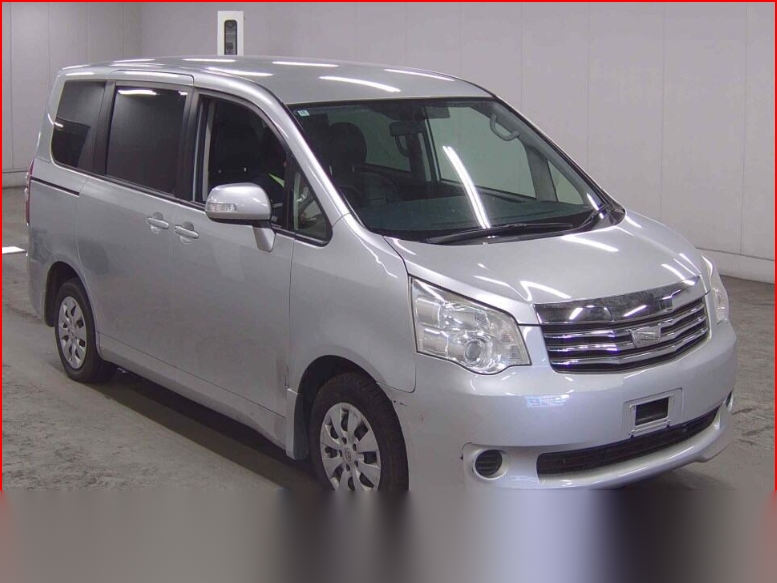
Buying a Used Toyota Noah from Japan: What Caribbean Buyers Should Know
The Toyota Noah is one of the most sensible vehicles you can import into the Caribbean. It is a compact eight-seat MPV built for Japan's narrow streets, it runs on regular petrol, and it shares a large number of parts with other Toyota models — which matters when you need a brake pad or an air-conditioning compressor in Kingston, Port of Spain or Bridgetown.
If you are shopping for a used Toyota Noah for sale, four things decide whether you get a good deal: the trim you pick, the condition you can verify, the running costs, and the import process.
Why the Noah Suits Jamaica and the Caribbean
Japan drives on the left, so the Noah arrives right-hand drive — exactly what Jamaica and most Eastern Caribbean islands require. It is also narrower than a full-size van like a HiAce, so it fits local lanes and parking, while still carrying eight people with the third row up or folded.
Common Trims on the Second-Generation Noah (2007–2014)
The second-generation Noah came in several grades: X, X Limited, S, Si, G and G Limited, plus a hybrid version from 2011. Broadly:
- X / X Limited — the popular family grade. The X Limited generally adds alloy wheels, power sliding doors, fog lamps and nicer trim, though factory option packs varied, so verify each individual car.
- S / Si — a sportier look with different bumpers and wheels.
- G / G Limited — the plushest specification, with more equipment.
- Hybrid — better fuel figures but a more complex used purchase, where battery health is the key question.
Seating is normally eight (2-3-3), with seven-seat layouts in some grades using second-row captain's chairs.
A useful benchmark for a clean mid-to-upper spec car is the 2012 Toyota Noah X Limited currently in GULJI TRADERS stock: 2,000 cc petrol engine, automatic transmission, 2-wheel drive, 8 seats, right-hand steering, showing 148,990 km. That works out to roughly 11,000–12,000 km a year across its life — normal rather than alarming, but it still deserves a proper inspection.
What to Check Before You Commit
- Auction sheet and mileage evidence. Japanese auction sheets grade condition and record mileage. Cross-check the odometer against service stickers and the export certificate.
- CVT behaviour. Most second-generation petrol Noahs use a continuously variable automatic. A test drive should be smooth with no shuddering, and CVT fluid should have been changed periodically — roughly every 40,000–60,000 km is a reasonable rule of thumb.
- Sliding doors. Power sliding doors are a common failure point. Operate both sides several times.
- Air conditioning. Non-negotiable in the Caribbean. Confirm the front and rear blowers cool properly while idling in traffic.
- Rust and underbody. Check sills, wheel arches, subframe and exhaust. Japanese coastal salt and Caribbean sea air both take a toll.
- Evidence of heavy commercial use. Many Noahs work as taxis. Look at seat bolsters, door handles, pedal rubbers and cargo-area scuffs.
- Paperwork match. Chassis and engine numbers must match the export certificate — mismatches cause genuine delays at customs.
Running Costs to Budget For
- Fuel: a 2.0-litre petrol Noah typically returns somewhere around 10–14 km per litre in mixed driving, less with a full load and the air conditioning running.
- Servicing: oil and filter changes every 5,000–10,000 km depending on local conditions; Caribbean heat and stop-start traffic favour the shorter interval.
- Tyres and brakes: common 15-inch sizes are widely available and inexpensive compared with European MPV rubber.
- Insurance, road licence and fitness: budget for annual inspection and registration in your island, plus comprehensive cover, usually rated on engine size and value.
- Consumables: shocks, bushings and A/C components wear faster on rough roads and heavy loads, so keep a small maintenance fund.
How Toyota Noah Import from Japan to Jamaica Works
- Buy from a reputable Japanese exporter, ideally with an auction sheet, real photos and verified mileage.
- Confirm your island's rules first. Jamaica's Trade Board sets a maximum age for used vehicle imports and the policy has shifted over time, so check the current limit before paying a deposit. Trinidad, Barbados, Guyana and the Bahamas each have their own age and duty rules.
- Shipping. RoRo is usually the cheapest method from ports such as Yokohama, Nagoya or Osaka to Kingston; container shipping costs more but protects the vehicle better. Transit typically takes several weeks.
- Customs clearance. Jamaica assesses duties on the CIF value (cost, insurance, freight), with import duty, Special Consumption Tax, GCT and an environmental levy typically applying. Ask a licensed customs broker for a landed-cost estimate before you commit — the tax bill, not the vehicle price, is where budgets usually go wrong.
- Inspection and registration. After clearance the vehicle must be inspected and registered locally before it can legally take to the road.
For Toyota Noah Jamaica buyers in particular, the smartest move is to settle the landed cost and the age rule first, then start comparing cars.
The Bottom Line
A Japanese used Toyota Noah is a genuinely practical Caribbean family vehicle: right-hand drive, eight seats, simple mechanicals and easy parts. Choose the grade that suits your needs, insist on documentation and an independent inspection, and price the landed cost before you fall in love with a listing.
See it in stock: 2012 Toyota Noah X Limited — live price, full photos and auction sheet. Browse all Toyota cars.