Buying a Used Toyota Aqua from Japan: What to Check, Common Trims and How Importing Works
The Toyota Aqua is one of the most sensible small hybrids ever built in Japan, and it has become a Caribbean staple for one simple reason: it sips fuel. If you are weighing up a used Toyota Aqua for sale, the trick is knowing which trim you are looking at, what wears out on a 2016-era car, and what the paperwork looks like when you land one in Kingston or Bridgetown.
What the Aqua Actually Is
The Aqua launched in Japan in late 2011 and was sold elsewhere as the Prius c. It pairs a 1.5-litre Atkinson-cycle petrol engine with an electric motor and a nickel-metal hydride battery pack under the rear seat, driving through an e-CVT automatic. It's front-wheel drive on most cars, with an AWD version offered in Japan. The body is a compact five-door hatchback with a tight turning circle and adult-friendly rear legroom for the class.
Because it is a hybrid, the Aqua's real selling point is economy. Japanese test cycles quoted figures in the 30s km/L; in real Caribbean use, owners typically see something nearer 20–25 km/L depending on how much air-conditioning they run. That matters when petrol is expensive.
Which Grade Was Which
Japanese-market Aquas were sold in a few broad grades — commonly L, S and G — plus special packages and editions depending on the year. As a rule of thumb:
- L is the simplest, most fuel-economy-focused spec.
- S sits mid-to-upper grade with a slightly sportier flavour and more equipment.
- G is the more comfort-oriented, higher-specification grade.
The facelift and later cars also offered advanced safety equipment such as pre-collision braking on certain packages, so the age of the car matters as much as the letter on the badge. "Push Start" simply means push-button ignition with a smart key rather than a keyed barrel.
What to Check on a Used Aqua
- Hybrid battery health. Take a 10-minute drive, watch for hybrid system warning lights, and if you can, get an OBD battery health check. Age matters more than mileage; a hot climate will eventually take its toll.
- Battery cooling. The hybrid battery fan and filter sit near the rear seat. A blocked or neglected fan is a common cause of premature battery wear.
- History and mileage. Ask for the Japanese auction sheet or export inspection where available. Verify odometer readings against service records — low km cars are common in Japan but should still be plausible for their age.
- Brakes. Regenerative braking means pads last a long time, but pedal feel should be consistent, not spongy.
- Air-conditioning. Test it properly on a hot day; Caribbean buyers cannot compromise here.
- Rust and accident repair. Check panel gaps, paint match, and the underside of cars from coastal regions.
- Tyres and 12V battery. Cheap to replace, but useful negotiating points.
Running Costs
Servicing is straightforward: routine engine oil and filter changes, brake fluid, coolant, cabin and air filters, and an inspection of the hybrid cooling fan. The e-CVT has no clutch to wear, and brake pads are consumed slowly. Budget for tyres, insurance, road tax and annual inspection, plus the eventual one-off cost of a hybrid battery replacement if the car is old enough. Japanese used Toyota Aqua models share many consumables with other Toyota hybrids, so parts are usually orderable rather than exotic.
How Importing to Jamaica and the Caribbean Works
Most Toyota Aqua import from Japan transactions follow the same path:
- Source and inspect the car in Japan, ideally with an auction sheet or dealer report.
- Export paperwork — deregistration/export certificate, invoice and bill of lading.
- Shipping — usually roll-on/roll-off from Nagoya, Yokohama or Osaka, roughly four to seven weeks to the region.
- Customs clearance — duty is calculated on CIF value and, importantly, banded by engine capacity, then GCT and other levies are applied. Engine size therefore affects your landed cost.
- Compliance and registration — inspection, plates, insurance and road tax. Jamaica drives on the left, so a right-hand-drive Toyota Aqua Jamaica buyers want is exactly the configuration these cars come in.
Two things to verify before you commit: Jamaica and several other islands cap the age of used vehicle imports, and each Caribbean territory has its own duty scale and documents. Rules get adjusted, so confirm with customs or a licensed broker. Trinidad, Barbados, the Bahamas, Antigua and the Cayman Islands also drive on the left and accept RHD; the Dominican Republic, Haiti and Puerto Rico drive on the right, so RHD cars are problematic there.
A Real Example From Stock
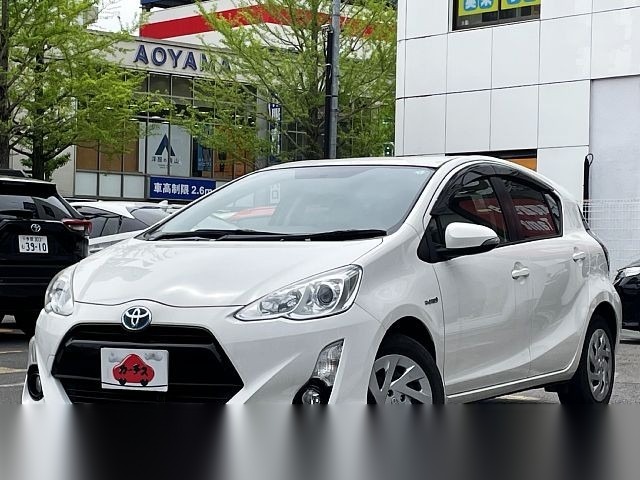
A good illustration of a sound spec is the 2016 Toyota Aqua Push Start S Grade currently listed with GULJI TRADING: 1,500 cc petrol engine, automatic transmission, two-wheel drive, five seats, right-hand steering, and 40,000 km on the clock. The S grade with push start is a comfortable, well-equipped place to sit, and 40,000 km on a 2016 car is low — worth confirming against the auction sheet and service history, but if it stacks up, that is a strong starting point for a long, cheap-to-run Caribbean ownership.
See it in stock: 2016 Toyota Aqua Push Start S Grade — live price, full photos and auction sheet. Browse all Toyota cars.