Buying a Used Suzuki Every from Japan: What to Check, Trims, Running Costs and Importing
The Suzuki Every is one of the smartest small vehicles you can put on a Caribbean road. It is a kei-class microvan: compact on the outside, genuinely roomy inside, and light on fuel. That is why the used Suzuki Every for sale listings across the region are dominated by units that were first driven in Japan. The Suzuki Every Jamaica buyers see on dealer lots today mostly arrived as Japanese used imports.
If you are comparing imports, this guide covers the trims worth knowing, what to inspect, what ownership really costs, and how a Suzuki Every import from Japan actually works when the destination is Jamaica or another Caribbean island.
Common trims: GA, PA, PC, PZ and Every Wagon
Suzuki built the Every in several grades, and the badge tells you a lot about how the van lived its life:
- GA - the base work version. Simple trim, often minimal sound insulation and sometimes no factory A/C, which matters in tropical heat.
- PA - the mid-grade that makes up most of the Japanese used market: power steering, A/C, cloth seats, and a mix of naturally aspirated and turbocharged engines.
- PC - a step up in equipment and comfort, frequently in the passenger-oriented range.
- PZ and Every Wagon (JP Turbo) - the plushest versions, usually turbocharged with alloys, better seats and more sound deadening.
- Join - high-roof and wheelchair-accessible variants.
Two variables matter as much as the badge: turbo or naturally aspirated, and 2WD or 4WD. Turbo gives easier highway cruising but adds parts to maintain. Four-wheel drive was mostly bought in snowy regions of Japan, which is handy on a wet hillside - but snow means road salt, so rust inspection matters far more.
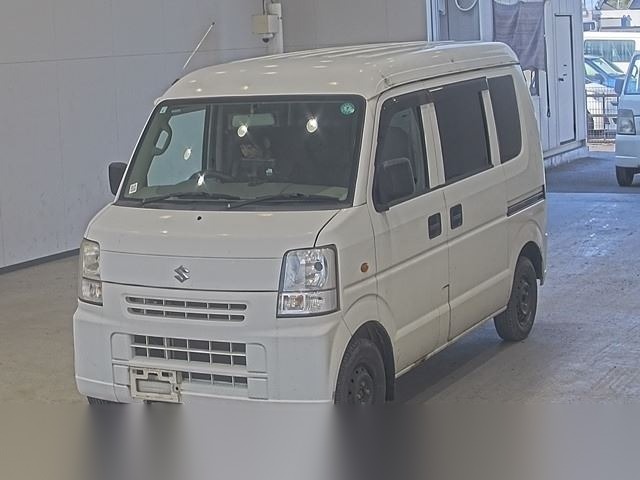
The 2012 Suzuki Every Pa in stock at GULJI TRADERS
To make this concrete, here is a real unit currently in GULJI TRADERS stock:
- 2012 Suzuki Every Pa
- 660 cc petrol engine
- Automatic transmission
- 4-wheel drive
- 5 seats
- Right-hand steering
- 209,101 km
A few honest observations. At 209,101 km this is a well-used van rather than a low-mileage garage queen, which is normal for kei vans exported at this age. The 660 cc three-cylinder used in the Every runs a timing chain instead of a belt, so there is no scheduled belt change, but it rewards regular oil changes. The 4WD and automatic add weight, so expect relaxed acceleration instead of quick overtaking; the 4WD gear is a genuine asset on dirt tracks and wet hillsides. And because it is right-hand drive, it is a straightforward fit for Jamaica and other left-hand-traffic islands.
What to check before you commit
- Rust. Check the rear wheel arches, sliding-door track, tailgate sill, under the front carpets, the floor pan, and around seat-belt anchors and rear suspension mounts.
- A/C. Not optional in the Caribbean. Confirm the compressor engages and the vents blow genuinely cold at idle.
- Engine and driveline. Listen for timing-chain rattle on cold start, look for oil leaks, and on a 4WD unit check CV boots, propshaft and transfer case for noise.
- Mileage history. Compare the odometer against the Japanese auction sheet or pre-shipment inspection record.
- Tyres and brakes. Kei vans use small wheels; worn tyres and tired brakes are common, cheap to fix, and good negotiating points.
Running costs
Fuel is the everyday win: a 660 cc van is usually good for roughly 13-18 km per litre in mixed driving, though a 4WD automatic carrying a load will sit at the lower end. Maintenance is simple - oil and filters every 5,000-8,000 km, plus plugs, coolant, brake fluid and automatic transmission fluid. Parts availability is one of the Every's strengths in the Caribbean, because so many were imported alongside the Suzuki Carry and Every Wagon and share consumables.
Budget for annual road licence and insurance based on engine size and value, a certificate of fitness in Jamaica, and a small fund for the first service after landing.
How importing to Jamaica and the Caribbean works
- Choose the vehicle and review the auction sheet or inspection report.
- Receive the exporter invoice, then arrange pre-shipment inspection (JEVIC or similar) and the export certificate.
- Ship by RoRo or container - typically several weeks to Kingston.
- Apply for an import licence through the Trade Board, where required for used vehicles.
- Clear customs through a broker. Duties and taxes are calculated on the CIF value (cost, insurance, freight) and generally include customs duty, Special Consumption Tax, GCT at 15%, plus environmental and administrative levies. Because the engine is only 660 cc, kei vans normally fall into the lowest duty bands - a large part of why they are affordable to land.
- Complete the roadworthiness inspection and certificate of fitness, then register and insure.
Rules differ by island. Jamaica drives on the left, so right-hand drive is required, as in most English-speaking Caribbean markets; right-hand-traffic countries such as the Dominican Republic need left-hand drive. Several islands also restrict the age of used vehicles at import, so confirm the current limit for your destination before paying a deposit.
The bottom line
If you want an inexpensive, frugal, easy-to-park vehicle with real carrying capacity, a Japanese used Suzuki Every is hard to beat. Pick the trim to suit your needs - PA for balance, PZ or Every Wagon for comfort, 4WD if you face rough roads - inspect rust and A/C carefully, and budget for import taxes and first-service costs rather than just the purchase price.
See it in stock: 2012 Suzuki Every Pa — live price, full photos and auction sheet. Browse all Suzuki cars.