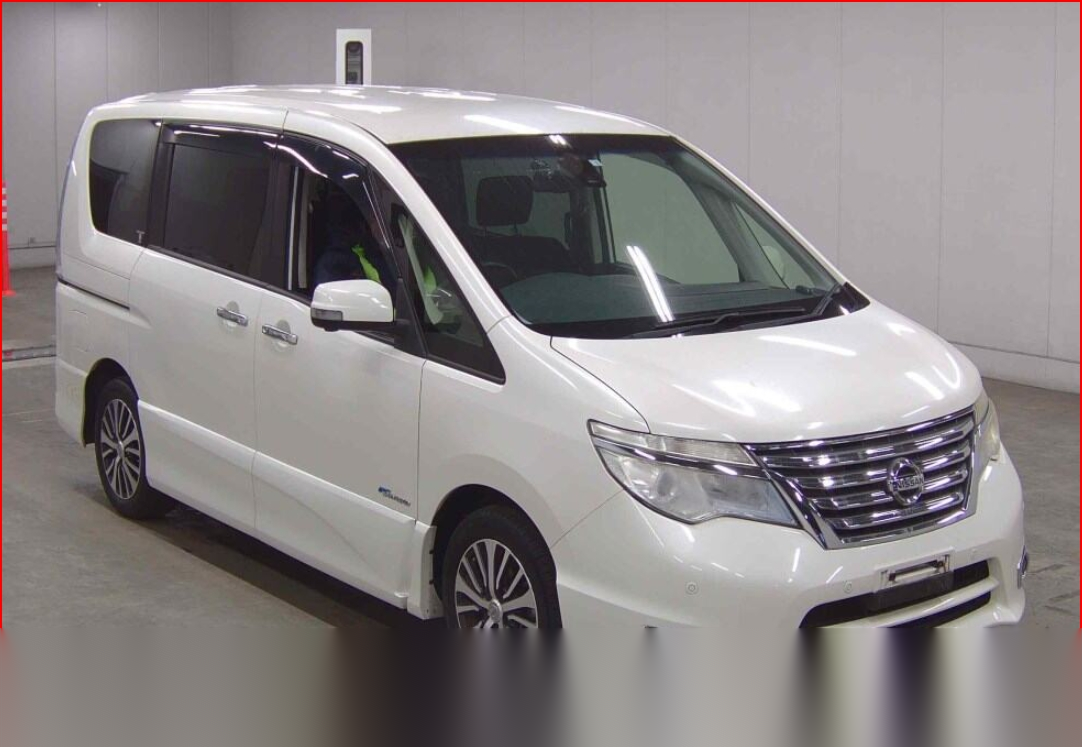
Buying a Used Nissan Serena from Japan: A Practical Guide for Caribbean Buyers
The Nissan Serena has quietly become one of the most sensible family vehicles on Caribbean roads. It is a true multi-purpose minivan with sliding doors, a tall, boxy cabin and seating for up to eight, and it costs far less to run than a large SUV. That combination is exactly why demand for a used Nissan Serena for sale across Jamaica and the wider region keeps growing.
If you are shopping for a Japanese used Nissan Serena, four things decide whether you get a bargain or a headache: the trim, the mechanical condition, the running costs, and how the import paperwork works. Here is the short version of each.
Why the Serena Suits Caribbean Family Life
The boxy shape looks plain until you sit inside. Three rows, sliding rear doors that open in tight parking spots, a flat-folding third row for cargo, and a high seating position that gives a good view over traffic. For a family in Kingston or Port of Spain it does school runs, airport pickups and market trips without complaint, and it fits places a big American van simply cannot.
Common Serena Trims Explained
Most Japanese-market Serenas fall into a handful of trim families:
- X and XV - the practical base models, basic but well equipped by regional standards.
- Highway Star and Highway Star V - the most common export trim, with aero bumpers, a better interior and often dual power sliding doors.
- Rider - an Autech-tuned version with sportier styling and a firmer look.
- e-POWER - introduced later in the model run; a petrol engine charges a battery that drives the wheels electrically. Different feel, different maintenance considerations.
Many 2.0-litre Serenas from this era also use Nissan's S-Hybrid mild-hybrid system, which assists the engine and improves economy. Confirm exactly what you are buying before you commit. Also budget for replacing the Japanese factory head unit, since Japanese sat-nav and radio bands usually do not work locally.
A Real Example: What a Good Serena Looks Like
GULJI TRADERS currently has a 2016 Nissan Serena in stock with these specifications: 2,000 cc petrol engine, automatic transmission, 103,345 km, 8 seats, right-hand steering. That mileage works out at roughly 11,000 to 12,000 km a year, which is normal, healthy use rather than a neglected high-miler. An eight-seat 2.0-litre automatic is the sweet spot for a Caribbean family: enough power for hills with a full load, and a right-hand-drive layout that suits left-hand-traffic islands.
What to Check Before You Buy
- CVT behaviour. Most automatic Serenas use Nissan's Xtronic CVT. On a test drive it should pull away smoothly with no shuddering, slipping or delayed engagement. Ask for CVT fluid service history.
- S-Hybrid battery health, if the trim has it. These are generally long-lived, but a failing unit is an expensive surprise.
- Power sliding doors. Check both sides open, close and reverse on obstruction. Door motors are a common wear item.
- Air conditioning. Caribbean heat is brutal. Confirm the system blows cold at idle, not just while moving.
- Rust and accident repair. Look underneath, around the tailgate and wheel arches, and check panel gaps and paint shade.
- Auction sheet and mileage. Japanese auction sheets grade condition and flag repairs. Cross-check the odometer against the export documents.
- Tyres, brakes and suspension. These are often the first things you replace after landing.
Running Costs to Budget For
The 2.0-litre engine is reasonably frugal for a vehicle this size. Japanese test figures sit near 15 km/L, but real-world driving with air conditioning and a full load typically returns somewhere around 10 to 13 km/L. Add engine oil and filter changes every 5,000 to 10,000 km, CVT fluid at sensible intervals, tyres, brakes, licensing and insurance. The engine uses a timing chain, so there is no timing belt service to schedule, and Nissan shared components mean servicing is rarely a crisis.
Importing a Nissan Serena to Jamaica and the Caribbean
The process is well trodden, but it rewards care:
- Choose the vehicle and review the inspection report or auction sheet before paying a deposit.
- Check your country's import rules. Jamaica, Barbados, Trinidad and other islands each set their own age limits and specification requirements, so confirm with local Customs before you buy.
- Shipping. Most units leave Japanese ports such as Yokohama or Nagoya by RO-RO or in a container; transit to Kingston generally takes several weeks.
- Documentation. You will need the export certificate, de-registration papers, bill of lading and invoice.
- Customs clearance. Import duty, GCT and other charges are assessed on a CIF-based valuation, and a licensed broker makes this far simpler.
- After landing. Fitness testing, licensing and any local inspection requirements.
Right-hand drive is a practical advantage: most English-speaking Caribbean islands drive on the left, so a Nissan Serena import from Japan needs no conversion.
The Bottom Line
A used Nissan Serena is one of the smarter family-car imports available, provided you buy on condition rather than price alone. Check the CVT, the sliding doors, the air conditioning and the paperwork, understand what your island will charge you at the port, and you end up with an eight-seat workhorse that earns its keep for years.
See it in stock: 2016 Nissan Serena — live price, full photos and auction sheet. Browse all Nissan cars.