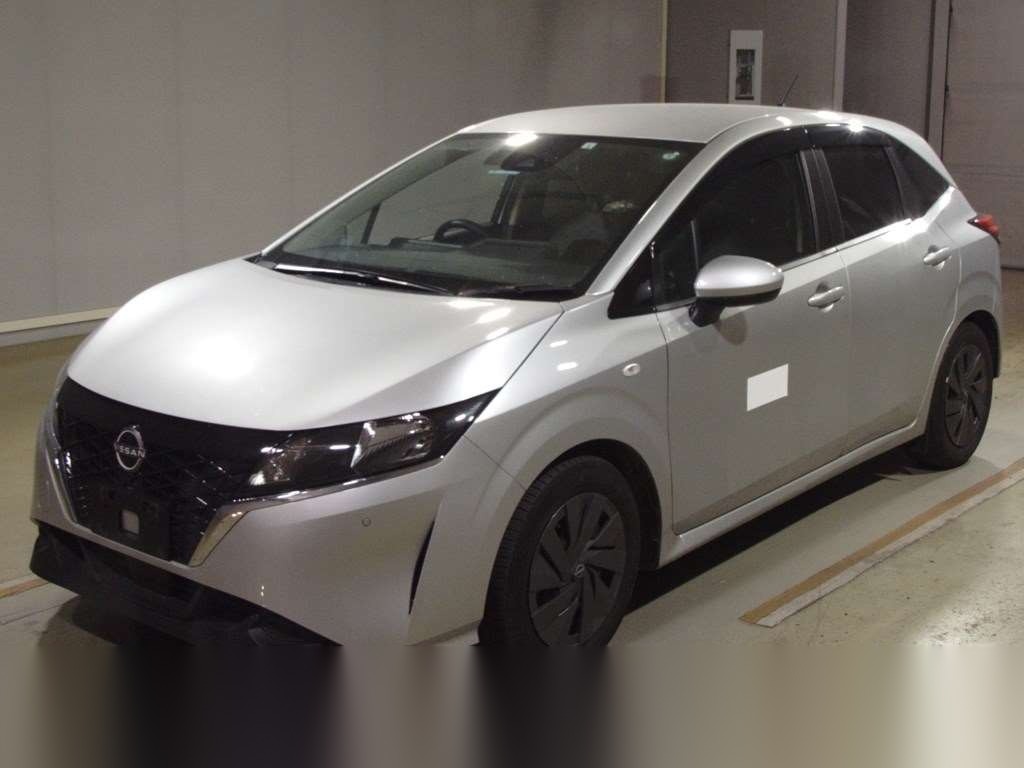
Japan's domestic market is one of the best places in the world to find a tidy, low-mileage compact hatchback, and the Nissan Note is one of the smartest picks from that list for Caribbean roads. It is right-hand drive, cheap to run and easy to service — a far better fit for island driving than a big imported SUV.
If you are shopping for a used Nissan Note for sale, here is what to inspect, what the trim names mean, what it costs to run, and how a Nissan Note import from Japan actually reaches your driveway.
The example in stock right now
GULJI TRADERS currently lists a 2022 Nissan Note Push Start S Grade with these specifications:
- Engine: 1,200 cc
- Fuel: Petrol / Gasoline
- Transmission: Automatic
- Seats: 5
- Steering: Right-hand drive
That combination — small petrol engine, automatic gearbox, five doors — is exactly what most Caribbean buyers should be looking at. Push-button start means an intelligent-key system; ask for both key fobs, because replacements are costly and need programming.
Contact GULJI TRADERS directly for current pricing, documentation and shipping timelines on this unit, and ask whether the Japanese auction sheet or inspection report comes with it.
Why the Note works in Jamaica and the Caribbean
Right-hand drive matches Jamaica's road rules and those of most English-speaking Caribbean islands, so Japanese-market cars are a natural fit rather than a compromise. The compact footprint suits narrow roads and tight parking, the air conditioning handles tropical heat well, and a 1.2-litre engine typically sits in the lowest annual licence-fee band in Jamaica, where licensing and fitness costs are calculated partly on engine capacity. Nissan also has a strong dealer and independent workshop network across the region, so brakes, sensors and suspension parts are not exotic.
Common Nissan Note trims
Japanese-market Notes were sold in a long list of grades:
- S — entry grade, but still usually well equipped with A/C, power windows and, in this car, push-button start.
- X / XV — mid and upper grades with more kit: alloy wheels, climate control, upgraded audio and safety packs.
- Medallist — a plusher trim seen on earlier generations.
- Rider / Rider Black Line — sporty body styling and dark accents.
- NISMO / NISMO S — the performance-look range with suspension and body upgrades.
- Autech / Autech Crossover — premium and crossover-styled versions.
- e-POWER grades — Nissan's series hybrid, where an electric motor drives the wheels and the petrol engine generates electricity. The 2022 Push Start S Grade above is listed as a petrol model, not e-POWER.
What to check before you buy
- Auction sheet and grade. Look at the overall grade and any repair markings on the sheet — they flag replaced panels or accident history.
- Mileage consistency. Cross-check the export certificate, service stickers and auction data.
- Automatic transmission. Notes of this era use a CVT. Test for judder on take-off, hesitation, whining or jerky ratio changes, and ask about CVT fluid service history.
- Air conditioning. Test it cold, at idle and in traffic. It is the most expensive comfort repair in the Caribbean.
- Underbody rust. Cars from snow-belt prefectures can carry surface corrosion underneath.
- Battery and electrics. Heat shortens 12V battery life quickly, and push-start systems depend on a healthy battery and a working fob.
- Radio band. Japanese FM radios tune roughly 76–90 MHz, so budget for a band expander or an aftermarket head unit for local stations.
- Tyres, spare wheel and tool kit.
- Warning lights. Airbag, engine and ABS lights should all clear after start-up.
Running costs
- Fuel. A 1,200 cc petrol automatic is one of the cheapest mainstream cars to fuel. Manufacturer figures usually land in roughly the mid-5 to low-7 L/100 km range depending on grade and test cycle; in tropical heat with the A/C running constantly, expect the higher end.
- Licensing and fitness. Small engine capacity keeps you in a lower fee band.
- Insurance. Value-based, with the usual third-party or comprehensive choice.
- Maintenance. Oil and filters on schedule, CVT fluid at the manufacturer's interval, brake pads, and small tyres (commonly 15–16 inch) that cost far less than SUV rubber.
How importing to Jamaica works
- Choose the vehicle and confirm the auction sheet, mileage and condition report.
- Confirm eligibility. Jamaica's used-vehicle import policy, administered through the Trade Board, sets age and eligibility rules — check current requirements before paying a deposit. A 2022 model is comfortably inside most limits.
- Receive documents: commercial invoice, export certificate or de-registration, and the bill of lading once shipped.
- Shipping. Usually roll-on/roll-off; roughly four to eight weeks to the Caribbean depending on routing and transshipment.
- Customs clearance. File the import entry, then pay import duty, Special Consumption Tax (which scales with engine size and vehicle age), GCT, environmental levy and port charges.
- Inspection, fitness certificate, registration and plates.
A note for other Caribbean islands
Most islands require right-hand drive and set an age ceiling on used imports — commonly somewhere between three and eight years — so a 2022 Nissan Note usually qualifies. Duty structures differ from country to country, so confirm the local rates for your island before committing.
The bottom line
A Japanese used Nissan Note is one of the most sensible small cars you can bring into the Caribbean: right-hand drive, frugal, easy to service and well suited to hot, crowded roads. Buy on condition and documentation rather than price alone — a clean auction sheet, a healthy CVT and a cold air conditioner matter far more than a few thousand kilometres on the clock.
See it in stock: 2022 Nissan Note Push Start S Grade — live price, full photos and auction sheet. Browse all Nissan cars.