Buying a Used Nissan Leaf from Japan: A Practical Guide for Jamaica and the Caribbean
The Nissan Leaf is the best-selling electric car in history, and Japan's used-car market is one of the biggest sources of them. Because Japan drives on the left, a Japanese used Nissan Leaf lands already configured for Jamaica, Barbados, Trinidad, the Bahamas, the Cayman Islands and most other right-hand-drive Caribbean markets — no conversion, no compromise on the steering side.
But an EV is a different kind of used purchase. The battery is the car, and a battery that was fine in cool, short-distance Japanese driving can behave differently under Caribbean heat. Here's what actually matters.
Why a Leaf suits island driving
Most island journeys are short, slow and repeated — exactly where an electric car is at its best. Regenerative braking recovers energy in stop-start traffic, there is no idling, and you can top up overnight at home on a standard single-phase supply. With a typical daily run well inside the car's range, the usual range anxiety argument mostly disappears on a small island.
Common Japanese-market trims
Japanese Leafs come in grades rather than the exported trim names you may have seen. The broad pattern:
- S — the basic grade. Smaller onboard AC charger on many cars, simpler infotainment, cloth seats.
- X — mid grade, usually a faster onboard charger, better audio, more equipment.
- G — top grade, often with Around View Monitor, leather-style trim and, on later cars, ProPILOT driver assistance and e-Pedal.
Battery size matters more than the badge. Early cars used 24 kWh packs, 2016 models moved to 30 kWh, and the second-generation ZE1 from 2018 came with a 40 kWh pack and a roughly 110 kW motor. A 62 kWh e+ version arrived in 2019. For island use, a 40 kWh car is a sensible sweet spot: real-world range typically lands well below the official figures, often around 200–250 km in mixed driving and less with heavy air-conditioning use.
What to check before you commit
Battery health is the whole ballgame. Ask for a State of Health (SoH) reading taken with an OBD-II dongle and an app such as LeafSpy. The same readout shows the quick-charge and normal-charge counts and the cell voltage spread — a large spread between the strongest and weakest cell is a warning sign. On the dashboard, the capacity bar display is a rough guide only: the first bar generally disappears around 85% SoH.
Heat is the local risk. The Leaf's battery is air-cooled, not liquid-cooled, so sustained high ambient temperatures accelerate degradation. A car that spent its Japanese life in a cool northern prefecture has an easier history, but its future in the Caribbean still depends on how it is parked and charged.
Charging hardware. Japanese cars use a Type 1 (J1772) AC inlet and CHAdeMO for DC fast charging. The charging cable supplied in Japan is often a 100/200V unit that will not work on a 230/240V grid, so budget for a local EVSE. DC fast chargers are still scarce across the region — plan on home charging.
Paperwork and body. Get the auction sheet and export certificate, verify the odometer, and check for accident repair, underside rust, suspension wear and tyre condition. Regenerative braking means brake pads often last the life of the car, but discs can seize or rust from lack of use. Also test the air-conditioning compressor and the 12V auxiliary battery, and expect Japanese-language displays and a Japanese FM band.
Running costs
Electricity is the main variable. Jamaican residential tariffs sit toward the higher end of the region, so check your current per-kWh rate before doing the maths: a 40 kWh pack filled at roughly US$0.35/kWh costs about US$14 for a full charge. Compare that with a tank of petrol over the same distance and the saving is usually large. Servicing is cheaper too — no oil, filters, spark plugs or exhaust — though tyres wear faster on a heavy, torquey EV. Set aside a contingency for eventual battery replacement, and factor in insurance, registration and inspection.
Importing to Jamaica and the Caribbean
Most buyers source through Japanese auctions or exporters, then ship by container or RoRo with the export certificate and de-registration documents. Jamaica applies age limits and a stack of charges — import duty, Special Consumption Tax, GCT and environmental levy — and because an EV has no engine displacement, it is assessed differently; electric vehicles have also benefited from concessions. Rules and rates change, so confirm the current treatment with a licensed customs broker before you commit. Other islands set their own age limits and tax bands, and left-hand-drive markets such as Guyana and Suriname need a different approach entirely.
In stock: a 2018 example
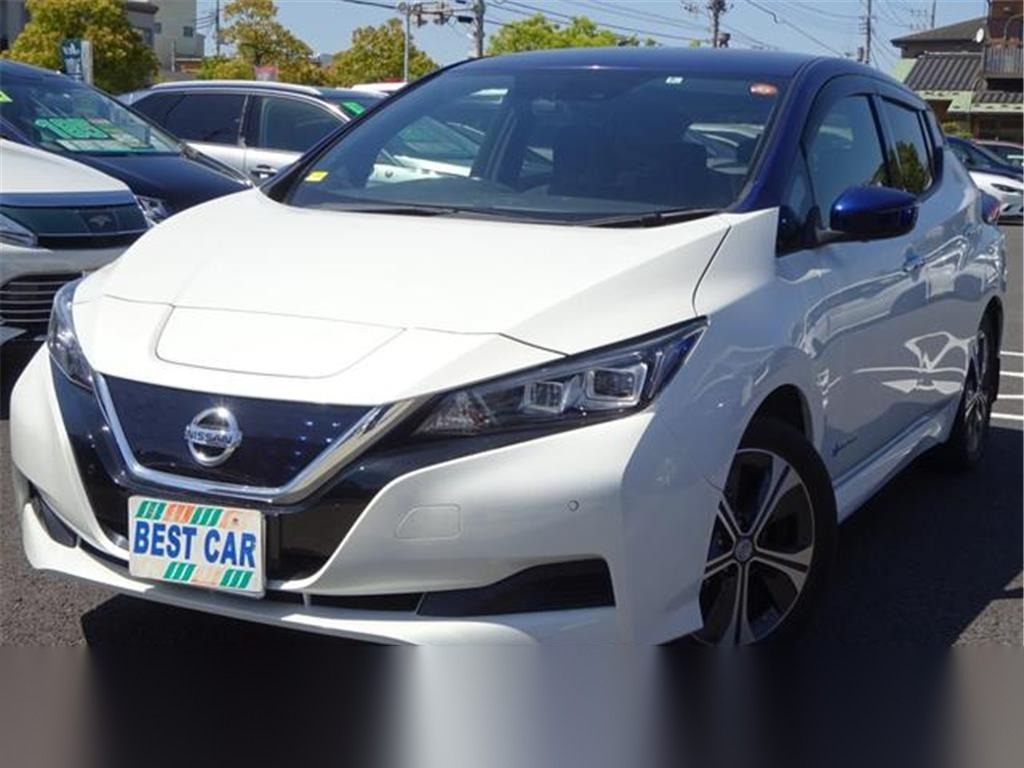
A current GULJI TRADING listing illustrates a typical ZE1 import: 2018 Nissan Leaf, electric, automatic, 2-wheel drive, 5 seats, right-hand drive, 92,350 km, engine N/A cc. That mileage works out to sensible annual use for a 2018 car. When enquiring about any Leaf, ask for the SoH report, charge counts and the dashboard capacity bars before anything else.
Quick pre-purchase checklist
- LeafSpy SoH report and cell voltage balance
- Quick-charge count and capacity bars
- Auction sheet, export certificate, odometer verification
- Underside rust, accident repair, tyre and brake condition
- Air-conditioning and 12V battery
- Charging cable compatibility and a local EVSE quote
- Current duty, tax and age-limit rules for your island
See it in stock: 2018 Nissan Leaf Electric — live price, full photos and auction sheet. Browse all Nissan cars.