Buying a Used Nissan Cube from Japan: What to Check Before You Import
The Nissan Cube is one of the most recognisable small cars ever built. It is boxy, tall, packed with clever interior touches and — because it was sold in huge numbers in Japan — it is one of the more affordable ways to get into a right-hand-drive Japanese used import in Jamaica and across the Caribbean. If you are shopping for a used Nissan Cube for sale, this guide covers the trims, the faults worth inspecting and how importing actually works.
What the Nissan Cube Actually Is
Most Cubes on the used market today are third-generation (Z12) cars, built from 2008 through 2019. Japanese-market versions were sold mainly with a 1.5-litre petrol four, while the North American version used a larger 1.8-litre engine — so a Japanese import is the more economical choice.
Cubes came in front-wheel drive and, in some grades, four-wheel drive. The layout is a tall, short body with a surprisingly roomy cabin, a five-seat interior, a sliding rear bench on many models and that signature asymmetrical rear window. It is genuinely easy to park and cheap to fuel — the reasons it remains popular as a city car in Kingston, Montego Bay and island towns alike.
Common Japanese Trims
Trim names in Japan differ from what you may know from other markets. The versions you will bump into most often:
- 15X — the volume-selling grade, reasonably well equipped.
- 15S and 15G — equipment levels vary by model year, with 15G generally the better-specced of the two.
- Rider and Rider High Performance — Autech-tuned versions with body kits and sportier styling.
- Kaaz — another Autech cosmetic special edition.
- FOUR — four-wheel-drive versions; useful in snow, less necessary in the Caribbean.
- Limited editions such as Indigo or Black Line — mostly appearance and trim packages rather than mechanical differences.
One thing to confirm is the transmission. Most Japanese Cubes use a CVT, often badged XTRONIC, while some variants use a conventional automatic. They drive differently and they age differently, so it is worth knowing which you are buying.
What to Check on a Used Nissan Cube
- Rust. Check the rear wheel arches, sills, tailgate and around the rear hatch glass. Coastal or salted-road cars are the risk.
- CVT behaviour. On a test drive, watch for shuddering, hesitation or slipping. Ask whether the CVT fluid has ever been changed — many workshops recommend a change roughly every 40,000–60,000 km.
- Air conditioning. Critical in the Caribbean. Confirm it blows cold at idle, not just while moving.
- Suspension and bushings. Tall body, small car — worn shocks and mounts are common and noticeable.
- Paperwork. Match the odometer to the Japanese export certificate and, if available, the auction sheet and grade.
- Interior quirks. Sliding seats, folding mechanisms and trim clips are easy to break and can be fiddly to source.
- Tyres and battery. Small tyres are inexpensive, but a tired set is a negotiating point.
The 1.5-litre engine and much of the running gear are shared with other small Nissans such as the Note, which helps when it comes to finding parts.
Running Costs to Budget For
Japanese-market 1.5-litre, two-wheel-drive Cubes were rated in the mid-to-high teens km/L on Japan's test cycles. Real-world mixed driving typically lands lower, especially with the air conditioning running — but it is still a frugal petrol car, and that matters where fuel is expensive. Insurance, fitness, registration and routine servicing are all in the small-car bracket. The one big-ticket item to plan for is a CVT rebuild or replacement if a previous owner neglected it.
Importing a Nissan Cube from Japan to Jamaica and the Caribbean
The broad process looks like this: choose the car, verify its auction sheet or export certificate, arrange shipping (RoRo or container), clear it at the port, then complete registration and fitness. In Jamaica, cars typically arrive at Kingston or Montego Bay and are cleared through a licensed customs broker, with costs including import duty, GCT, the environmental levy, wharf and handling charges and broker fees.
Two things make Japanese cars a natural fit for Jamaica: the island drives on the left, and Japanese cars are right-hand drive from the factory. The same applies in Trinidad, Barbados, St Lucia, Grenada and Antigua. The Dominican Republic and other left-hand-drive markets are a different story, so confirm before you buy.
Age limits and duty structures differ between islands and change from time to time. Always check the current rules with the relevant trade board and customs authority — or work with a licensed dealer who handles clearance regularly — before paying a deposit.
The Example Currently in GULJI TRADERS Stock
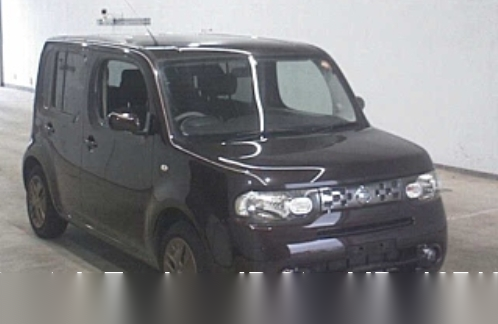
To make this concrete, here is a real unit from our current inventory:
- 2012 Nissan Cube
- Engine: 1,490 cc
- Fuel: Petrol / Gasoline
- Transmission: Automatic
- Mileage: 119,849 km
- Drivetrain: 2 Wheel Drive
- Seats: 5
- Steering: Right
A 2012 car showing 119,849 km works out to a fairly gentle annual average, and the 1.5-litre petrol, two-wheel-drive, automatic combination is the sensible, economical spec for island driving. Availability changes, so confirm the unit is still in stock before you plan around it.
Bottom Line
A used Nissan Cube is a smart, low-cost first import if you buy the right one. Prioritise body condition and CVT health over cosmetic extras, verify the Japanese paperwork, and budget for duty and clearing costs before you commit. Do that, and a Japanese used Nissan Cube can be one of the cheapest ways to put reliable, air-conditioned, right-hand-drive transport on a Caribbean road.
See it in stock: 2012 Nissan Cube — live price, full photos and auction sheet. Browse all Nissan cars.