Buying a Used Hino Liesse from Japan: A Guide for Jamaica and the Caribbean
Light-duty Japanese buses earn their keep in the Caribbean. The Hino Liesse is one of the favourites: small enough for narrow town roads, tough enough for daily route work, and powered by diesel that is available island-wide. If you are shopping for a used Hino Liesse for sale, this guide covers what to inspect, the common configurations, running costs, and how Hino Liesse import from Japan works for buyers in Jamaica and the wider region.
Why the Hino Liesse suits island roads
The Liesse is a body-on-frame bus with a four-cylinder diesel, which means simple mechanicals that local workshops already understand. It seats enough passengers to make a route, a school run or a hotel shuttle profitable, while staying compact enough to park and manoeuvre in places where a full-size coaster bus is awkward. Right-hand drive is standard, which suits Jamaica and most of the Eastern Caribbean, where traffic drives on the left.
Common trims and configurations
Hino built the Liesse family in several forms over the years. The Liesse II is the light-duty model, offered in short, standard and long wheelbases, with seating that generally ranges from about 24 up to 29 passengers depending on layout. You will find them configured as tourism shuttles with high-back reclining seats, as staff or school buses with simpler individual or bench seating, and occasionally with dual air conditioning for front and rear cabins, which matters a great deal in tropical heat.
Transmissions vary by year and original market. Manual gearboxes are common in fleet specification, while automatic versions are popular for stop-start town driving.
What to check before you commit
Rust and body. This is the number one killer of island buses. Inspect the floor pan, wheel arches, rear wheel wells, the entry step, the battery tray, the seat mounting rails and the chassis rails. Salt air and humidity find every weak seam. Also look for signs of accident repair: uneven panel gaps, overspray and irregular tyre wear.
Engine and cooling. On a four-litre class diesel, check cold-start smoke, blow-by from the oil filler, and leaks around the sump, injection pump and turbo hoses. Radiator core, hoses, water pump, thermostat and fan clutch deserve close attention, because overheating is what ends most bus engines early.
Driveline. Drive it cold and hot. Check automatic shift quality, torque converter shudder and transmission fluid colour and smell. Listen for differential whine and driveshaft vibration, and look at leaf springs, shackles and brake condition.
Interior and electrics. Test the air conditioning properly, front and rear, including compressor clutch engagement. Check folding doors, step lights, wipers, horn and interior lighting. Corroded seat frames and rails are both a safety and a repair-cost issue.
Tyres and paperwork. Buses use load-rated tyres that are not cheap, so check all of them plus the spare. Confirm odometer plausibility against service records, and ask for the auction sheet, export certificate and a pre-shipment inspection report from an outfit such as JEVIC or JAAI.
Running costs to budget for
A four-litre diesel bus will never be a small car on fuel, and consumption swings widely with load, terrain and air conditioning use. Ask an operator running a similar route for real numbers rather than relying on catalogue figures.
Beyond diesel, plan for annual fitness and licensing under the commercial passenger rules that apply in your island, insurance that reflects passenger-carrying use, regular oil and filter changes, fuel filter discipline, brake and tyre wear, and periodic air conditioning servicing. Many service parts are shared with Toyota commercial models, so parts supply is generally straightforward in Jamaica. Measure all of this against the revenue the bus can generate.
How importing to Jamaica and the Caribbean works
Jamaica, like most Caribbean nations, applies age limits to used vehicle imports, and commercial passenger vehicles can be treated differently from private cars, so confirm the current rules with the relevant authority before you bid on anything.
A typical Japanese used Hino Liesse purchase runs like this: source the vehicle from an exporter or auction, arrange an independent inspection, obtain the export certificate and de-registration, ship to a port such as Kingston, then clear it through a licensed customs broker. Budget for import duty, GCT, environmental levy, possible special consumption tax depending on class, plus port, handling and broker fees. Always ask for a landed-cost estimate, not just the FOB price. After arrival you will need fitness inspection, registration and plates before the bus can legally earn.
A current example in stock
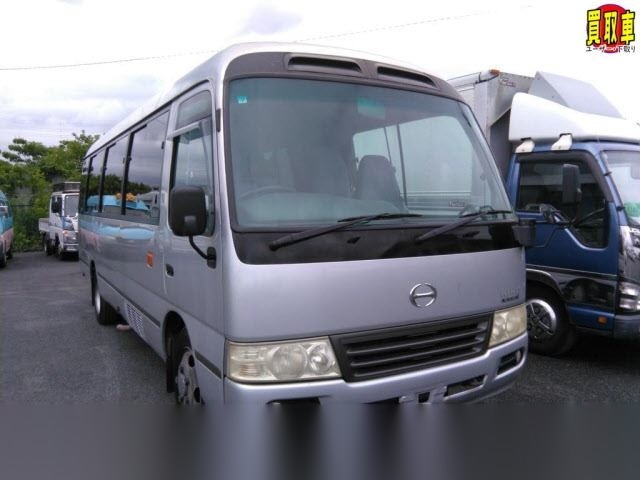
GULJI TRADERS currently lists a 2012 Hino Liesse 2 29 Seater Long: 4,000 cc diesel engine, automatic transmission, 200,758 km on the odometer and right-hand steering. That combination of a long body, 29 seats, automatic gearbox and diesel power is exactly what suits staff transport, tourism shuttles and route work. At roughly 16,000 km a year over its life, that mileage is consistent with a working bus rather than an abused one, but always verify it against service records.
Before buying, request underside photographs, engine bay shots, interior images and the inspection sheet. On an import bus, the paperwork and the underside tell you more than the paint does.
The bottom line
A Japanese used Hino Liesse can be a genuinely profitable vehicle in Jamaica and across the Caribbean if you buy the right example and budget honestly for maintenance. Inspect carefully, import through a reputable exporter and broker, and price in the running costs from day one.
See it in stock: 2012 Hino Liesse 2 29 Seater Long — live price, full photos and auction sheet. Browse all Hino cars.